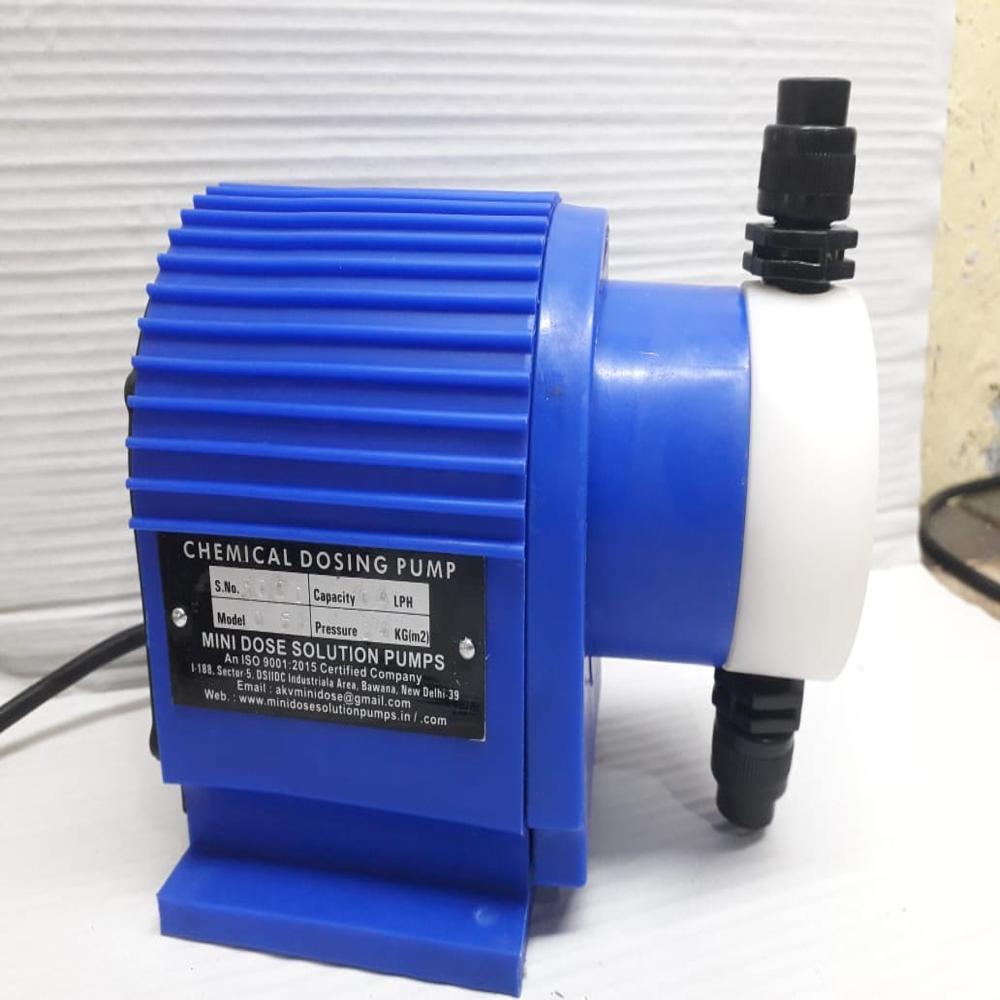
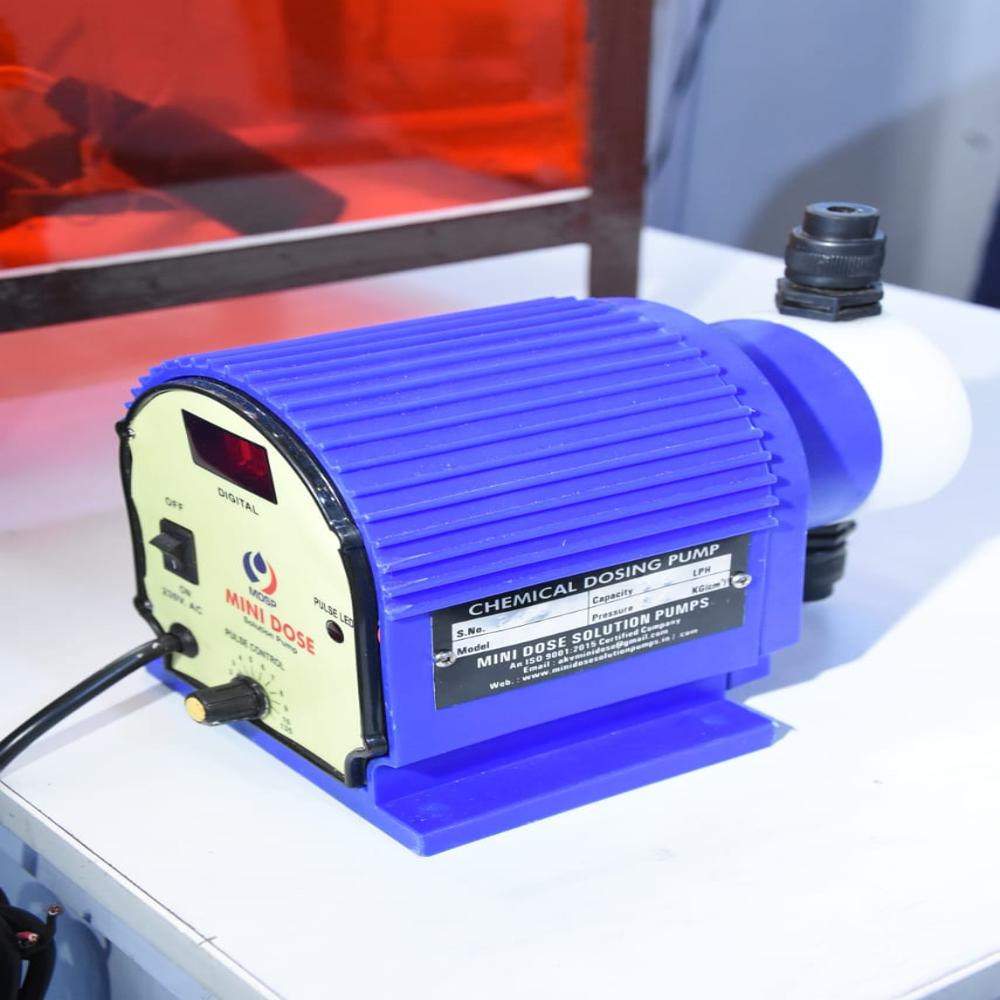
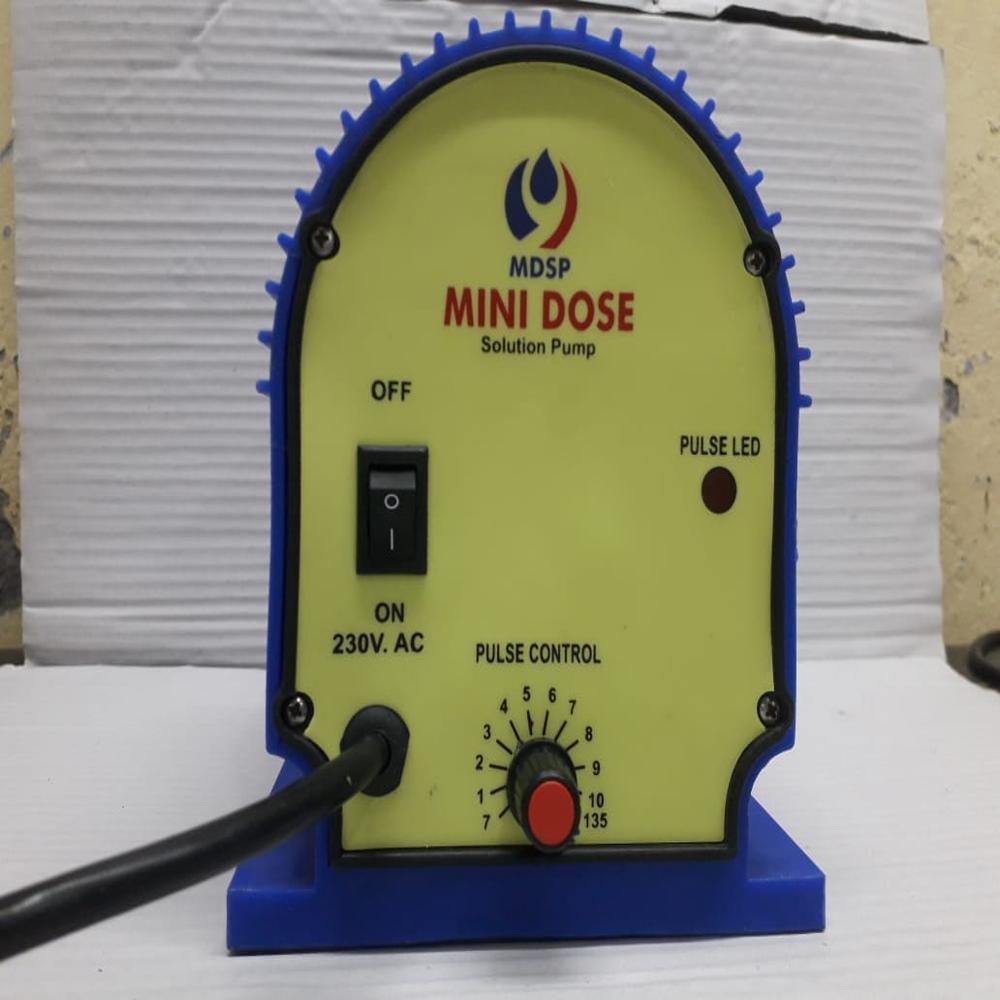
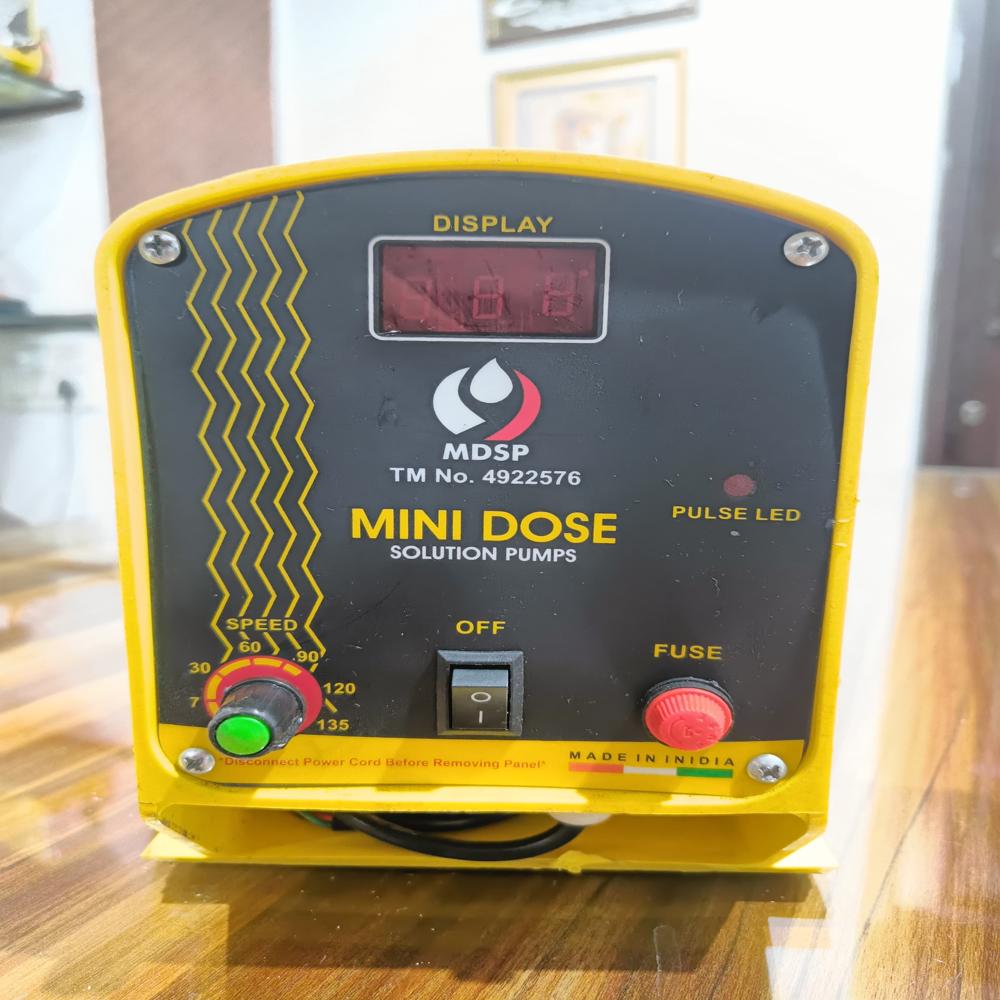
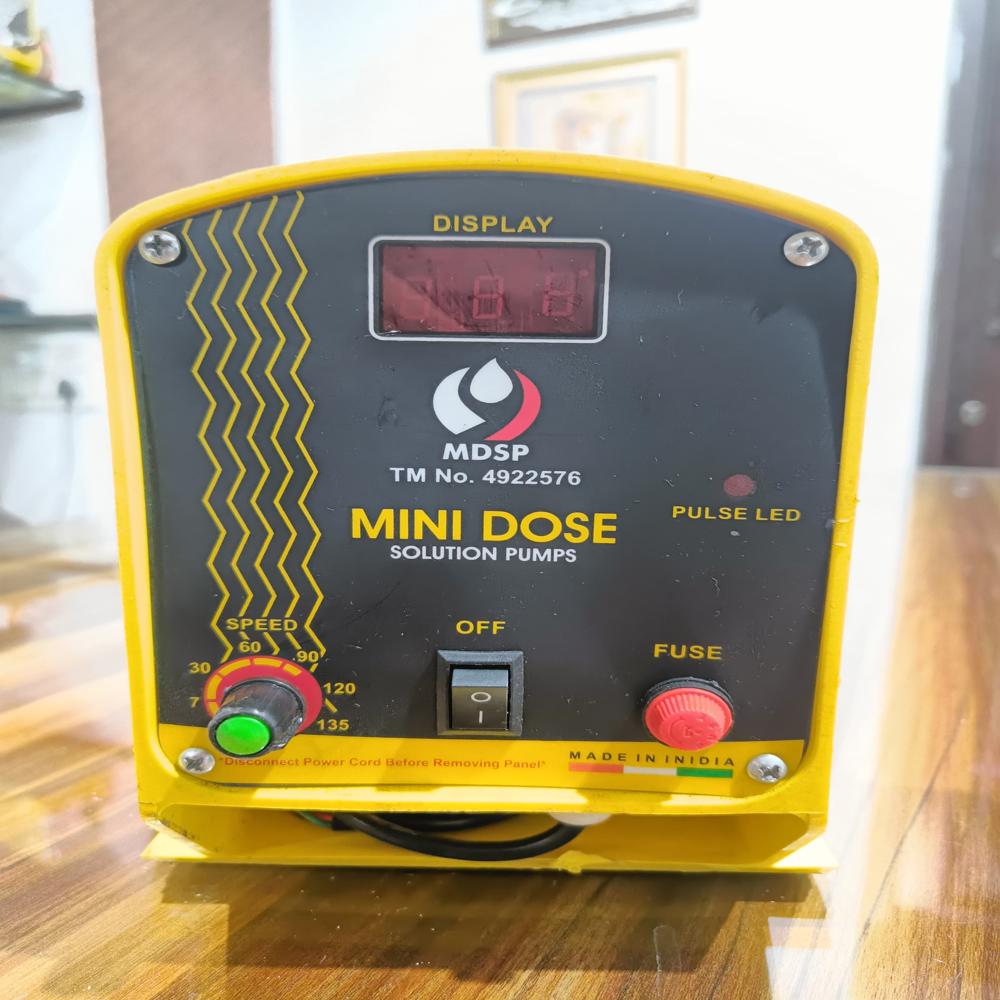
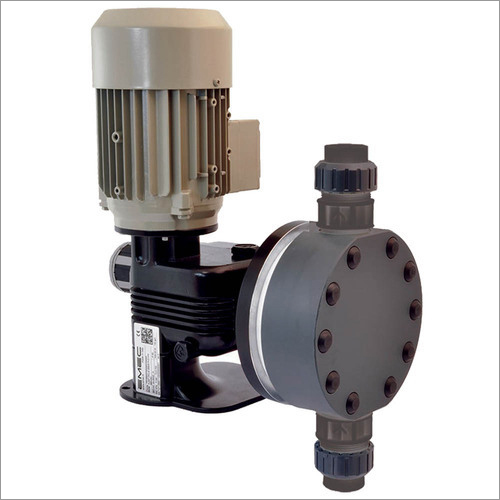
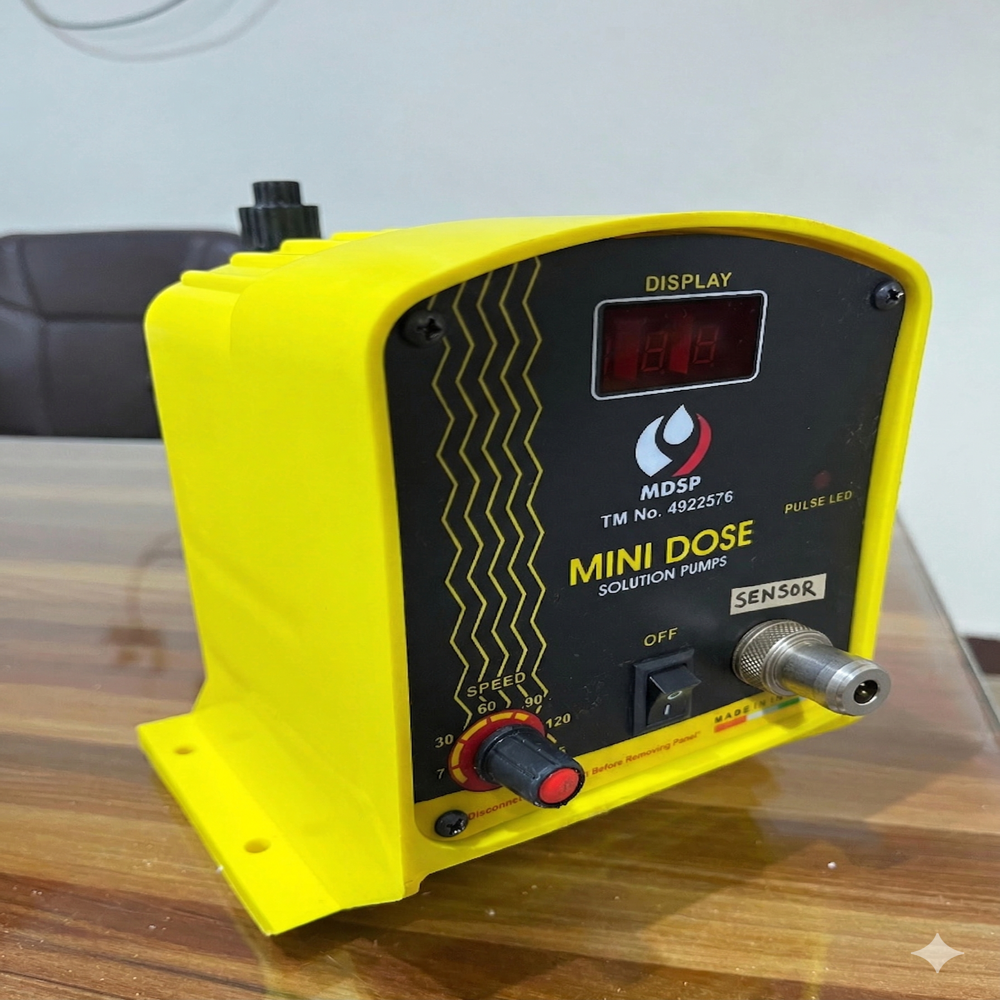
About Automatic Chlorine Dosing Pumps
Technical Specifications
|
Brand
|
MINI DOSE
|
|
Model
|
MED05
|
|
Max Flow Rate
|
0 TO 6 LPH
|
|
Head
|
PP
|
|
Dosing Pressure
|
3.5 TO 4.5 Kg/cm2
|
|
Stroke Controller
|
5-100%
|
|
Suction Tubing
|
6 mm
|
|
Voltage
|
230 V AC
|
|
Frequency
|
50 Hz
|
|
Power
|
23 W
|
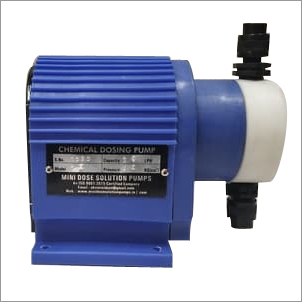
Reliable Dosing for Various IndustriesOur automatic chlorine dosing pump is engineered to perform in industries where precise chemical dosing is critical. With a sturdy mild steel build and a user-friendly diaphragm structure, it is suitable for multiple water treatment and chemical processing scenarios. Its standardized construction assures consistent and safe operation, reducing manual intervention.
Built to Last and Easy to MaintainConstructed with high-quality materials, including a mild steel casing and rubber seal, the pump is designed for long service life and minimal maintenance. The standardized 75 mm head and compact 3 kg weight make installation simple and space-efficient, optimal for facility upgrades or new projects.
FAQ's of Automatic Chlorine Dosing Pumps:
Q: How does the automatic chlorine dosing pump operate?
A: This pump utilizes a diaphragm mechanism to draw and discharge precise amounts of chlorine solution, regulated by a dosing suction system. Automated controls ensure the correct amount is dosed in each cycle, making the process accurate and reliable.
Q: What are the main benefits of using this chlorine dosing pump in water treatment?
A: The pump offers accurate chlorine dosing, minimizing chemical waste and ensuring optimal disinfection. Its automated operation reduces manual labor, while its ISO 9001:2015 certification guarantees a high standard of quality and safety for industrial applications.
Q: When should this pump be serviced or maintained?
A: Routine maintenance is recommended every six months to ensure reliable operation. Regularly check the rubber seals and diaphragm for wear and replace as necessary. Some processes may require more frequent inspections, depending on usage intensity.
Q: Where is this pump commonly used in India?
A: These dosing pumps are widely installed in municipal water treatment plants, industrial effluent management facilities, swimming pools, and other environments where precise chlorine dosing is essential for safety and compliance.
Q: What is the installation process for the chlorine dosing pump?
A: Installation involves connecting the inlet and outlet (both 1/1 size fittings), securing the pump on a stable surface, and integrating it with the existing chemical feed system. Proper alignment and sealing ensure optimal performance and leak prevention.
Q: How does the 0-6 LPH flow rate affect chemical dosing efficiency?
A: The adjustable flow rate allows users to precisely control the volume of chlorine dispensed, making it adaptable to varying process requirements. This flexibility helps optimize chemical usage, reduce operational costs, and improve safety.